Cooperation with Ukraine : Learning from each other: 15 years of Swiss-Ukrainian cooperation
In recent years, the Ukrainian education system has undergone major changes. While this is mainly due to the implementation of education and decentralisation reforms, the pandemic and the Russian war of aggression have also impacted the system. Since 2009, PH Zurich has been working closely with Ukraine on various initiatives relating to education and democracy. A current example is DECIDE, a project funded by the Swiss Agency for Development and Cooperation that is being realised in collaboration with the Ukrainian NGO DOCCU. Despite the difficult overall conditions, the first phase of the project – which took place from 2020 to 2025 – was a success.

Due to the size of Ukraine and the continuing effects of the war, DECIDE’s activities in support of reconstruction and educational reforms are highly important. At the Ukraine Recovery Conference in Rome in early July, Switzerland and Ukraine announced that they would extend their cooperation by signing a memorandum for the second phase of DECIDE. This phase is scheduled to take place from 1 September 2025 to 31 August 2030. Ilona Postemska, Senior National Programme Officer at the Swiss Embassy in Ukraine, has been involved in PH Zurich projects since the beginning.
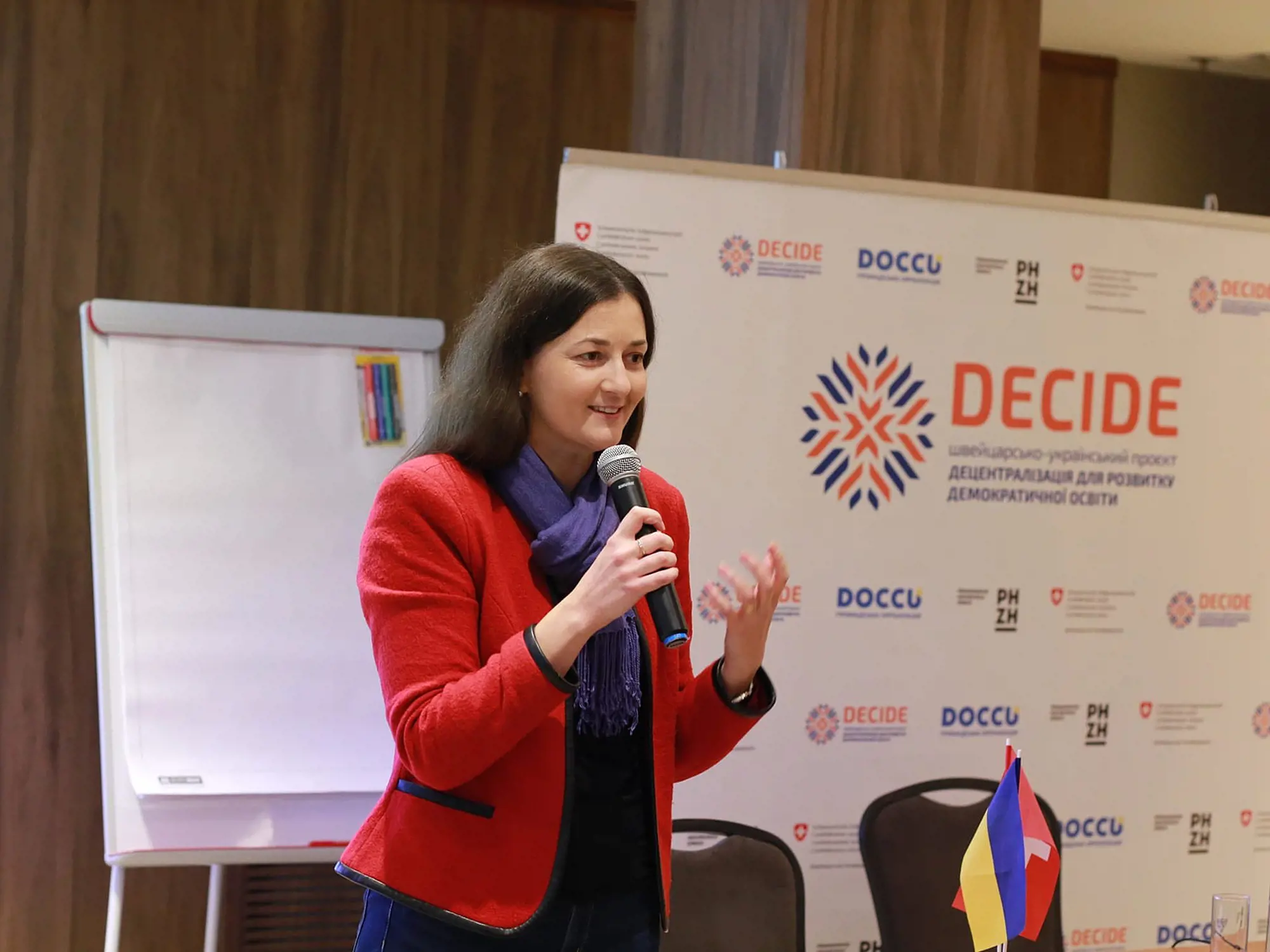
Ilona Postemska, what is the aim of DECIDE’s second phase?
The main goal is to ensure children in Ukraine continue to have access to quality education despite the ongoing war. It is essential to ensure these efforts can be managed effectively by the local communities. Looking to the future, education must be adapted to the needs of the labour market, and young people should undergo preparation for future careers and be involved in the recovery and development of their communities. This requires continuous, systemic support for decentralisation and education reforms in Ukraine.
How does the second phase of DECIDE build on previous projects carried out in collaboration with PH Zurich?
In the first phase, DECIDE created safe learning spaces, supported national and local education development strategies, and provided digital tools for effective and transparent management of the education sector. Thanks to DOCCU’s mini-grants and political education activities, schoolchildren were able to work on more than 100 projects in their communities. The second phase builds on these achievements and extends the activities of DECIDE to a total of nine regions and 40 municipalities. In addition, we are focusing on restoring labour resources, in particular by supporting local authorities with upgrading educational structures. Another focus is to promote an educational reform trajectory that opens up academic and vocational pathways for students. A key element of this educational reform will be Switzerland’s support for a career guidance system. This will build on the subject knowledge of PH Zurich and the “JOBS” teaching material, which was successfully tested during the first phase. Through these efforts, the recovery of today will ensure the growth of tomorrow.
How can Switzerland and Ukraine learn from each other?
Switzerland has invaluable subject knowledge and experience in local democracy, participatory education and administration. It has also developed a unique approach to vocational guidance, linking education with the demands of the labour market. All these elements are integral to Ukraine’s recovery. For its part, Ukraine continues to demonstrate remarkable resilience, serving as a prime example of how to implement systemic reforms in extreme circumstances and use innovation and digital tools to support children and communities in crisis situations. In other words, the learning process is mutual: Switzerland provides proven models for good education management, while Ukraine offers valuable insights into innovation, crisis management and the broad mobilisation of civil society.