Ukraine : Shaping the democratic school environment together
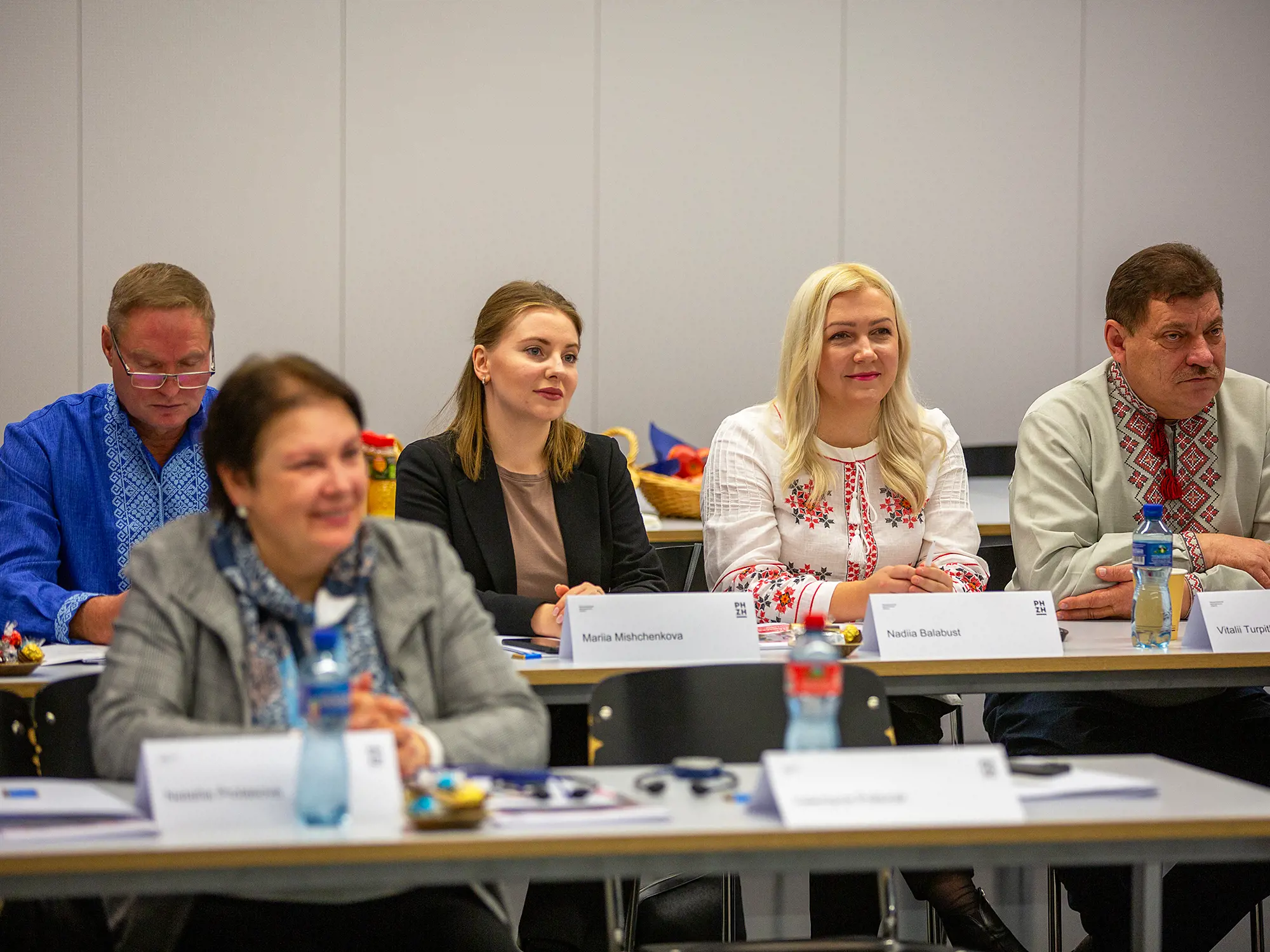
The Department for International Projects in Education (IPE) at the PH Zurich has been working with Ukraine on educational issues relating to democracy since 2009. In a way, it is almost a tradition that a delegation of mayors and representatives of education directorates from various municipalities in Ukraine visited the PH Zurich last week. Valentyna Poltorak, project manager of the Ukrainian NGO DOCCU, explained the reason for the visit as follows: “We are building a democratic society in Ukraine and are therefore very interested in specific instruments and approaches in the education policy of democratic countries like Switzerland.” The programme included an exchange with various Swiss education experts as well as a visit to the Baugewerbliche Berufsschule Zürich (BBZ) and the Sekundarschule Limmat.
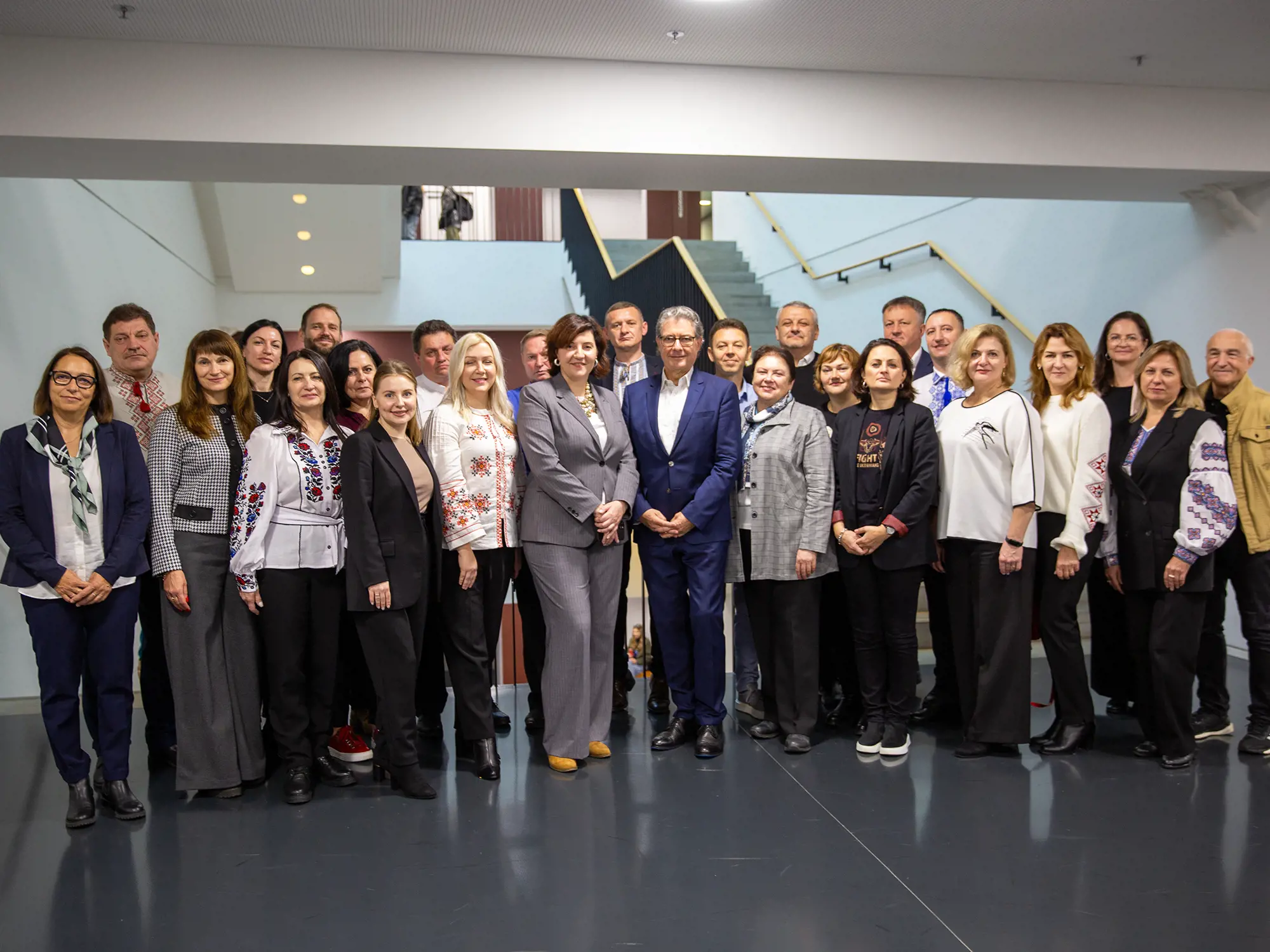
Originating from an exchange on education and democracy, which was carried out on behalf of the State Secretariat for Education, Research and Innovation (SERI), the NGO DOCCU and the Ukrainian Ministry of Education have promoted the training of hundreds of teachers at teacher training colleges and primary schools over the past few years. This was supported by the PH Zurich with the two projects Development of Citizenship Competences in Ukraine (DOCCU, 2016–2018) and Decentralisation for Improved Democratic Education (DECIDE, 2020–2024), both funded by the Swiss Agency for Development and Cooperation (SDC).
The fact that the education reforms were maintained despite various challenges such as the Maidan Revolution, the annexation of Crimea, the Covid pandemic and the Russian war of aggression shows Ukraine’s will and the commitment of the institutions involved to democracy and peace.
Corinna Borer, lecturer at the Centre for Teaching and Transcultural Learning and Swiss project manager of DECIDE, reflects on the cooperation to date as well as the expertise of the PH Zurich in democracy education.
Corinna Borer, the DECIDE project aims to decentralise the education system in Ukraine. What does this mean exactly?
The DECIDE project aims to decentralise the education system in Ukraine in order to make education more democratic and closer to the people. In concrete terms, this means developing effective administrative models at regional and local level and strengthening schools and local education authorities so that they can make independent decisions and are thus closer to the needs of pupils and communities. In addition, the project supports democratic education through further training, promotes the establishment of school authorities and supports the creation of school development strategies in which parents and pupils can also actively participate. With this commitment, DECIDE not only contributes to the formation of a democratic society, but also supports the implementation of the “New Ukrainian School” reform for democratic civic competences.
Why is the PH Zurich involved in democratic education in Ukraine?
Switzerland has been supporting Ukraine on its path to peace and sustainable development within the framework of international cooperation since 1990. This was the basis for the first cooperation in 2009, from which the need was expressed to closely assist the education system and the subsequent reforms. This resulted in a trusting cooperation between the partner institutions in Ukraine and the PH Zurich, which has proven itself in several crises. We believe that the education system in a democratic country must help young people to become responsible citizens. This includes not only knowledge about democratic structures and processes, but also an understanding of democracy as a way of life. We therefore support schools and authorities in the implementation of school reform, offer exchange opportunities with Swiss education stakeholders and promote networking in order to provide practical examples of implementation and to accompany the transfer to the Ukrainian context.
How has cooperation with Ukraine changed over the years?
At the beginning of the cooperation, we worked very closely with experts in the education sector on further education programmes and topics relating to democratic education and peacebuilding. These were then integrated as fixed elements in the training and further education programmes for teachers in Ukraine and are still in place today. With the establishment of the Ukrainian NGO DOCCU, we have placed responsibility in the hands of local actors for the long term. The current DECIDE project is a collaboration with the Ministry of Education to implement the “New Ukrainian School” reform. With the outbreak of war on 24 February 2022, the project was temporarily also geared towards humanitarian aid with the agreement of the SDC’s regional office in Kyiv. The local partners took care of refugee pupils, their parents and teachers.
So has DECIDE developed differently than planned?
Despite the numerous challenges posed by the war, the project continues to advocate for education reforms and supports educational institutions in war zones as well as the improvement of the vocational education system, the development of strategies for reconstruction and education modernisation. In addition, initiatives such as the “DECIDE Summer Clubs” offer help to children and teachers in war-affected areas to enable leisure activities, psychological support and the integration of internally displaced persons.
Are there any findings from the project that can also be applied in the Swiss context?
Some initiatives from the project and other experiences in international cooperation can be used as examples for an exchange in teacher training at the PH Zurich. But it is important to closely observe the local context in each project and adapt activities accordingly. In the elective Global Learning, we use our findings and provide students at the PH Zurich with insights into these and other collaborations in order to expand their transcultural competences and gain different perspectives on “foreign” education systems. In addition, we can certainly learn from the rapid transformation of digitalisation in Ukraine, as well as from the motivation of our partner institutions, colleagues and friends who are unwavering in their commitment to their work and to peace and democracy in their country. Their current situation requires a high degree of flexibility in order to be able to act quickly and effectively. It never ceases to amaze me how quickly decisions are made, events are implemented and school spaces are made safe. We can certainly learn from our colleagues that planning is good, but can also be adapted in certain situations.
The DECIDE project will be completed at the end of 2024. In what capacity will the collaboration continue?
The project framework for further cooperation has not yet been fully defined, as the objectives of further cooperation between Switzerland and Ukraine are still being worked out. What we have already started and will continue in 2025, however, is further training in the area of vocational orientation at secondary level. So far, we have worked with ten schools in six regions to adapt the “JOBS” material developed by the IPE to the Ukrainian context. The aim of the pilot concept “Career Guidance in Ukrainian Schools” is to strengthen the skills of Ukrainian young people, provide them with vocational orientation and support them in their transition from school to the local labour market, which plays an important role in the reconstruction phase. In this context, we hope to be able to continue our contribution to peace and reconstruction in Ukraine through the aforementioned cooperations in the years to come.