School improvement
Auch auf Deutsch verfügbar
Content of this page
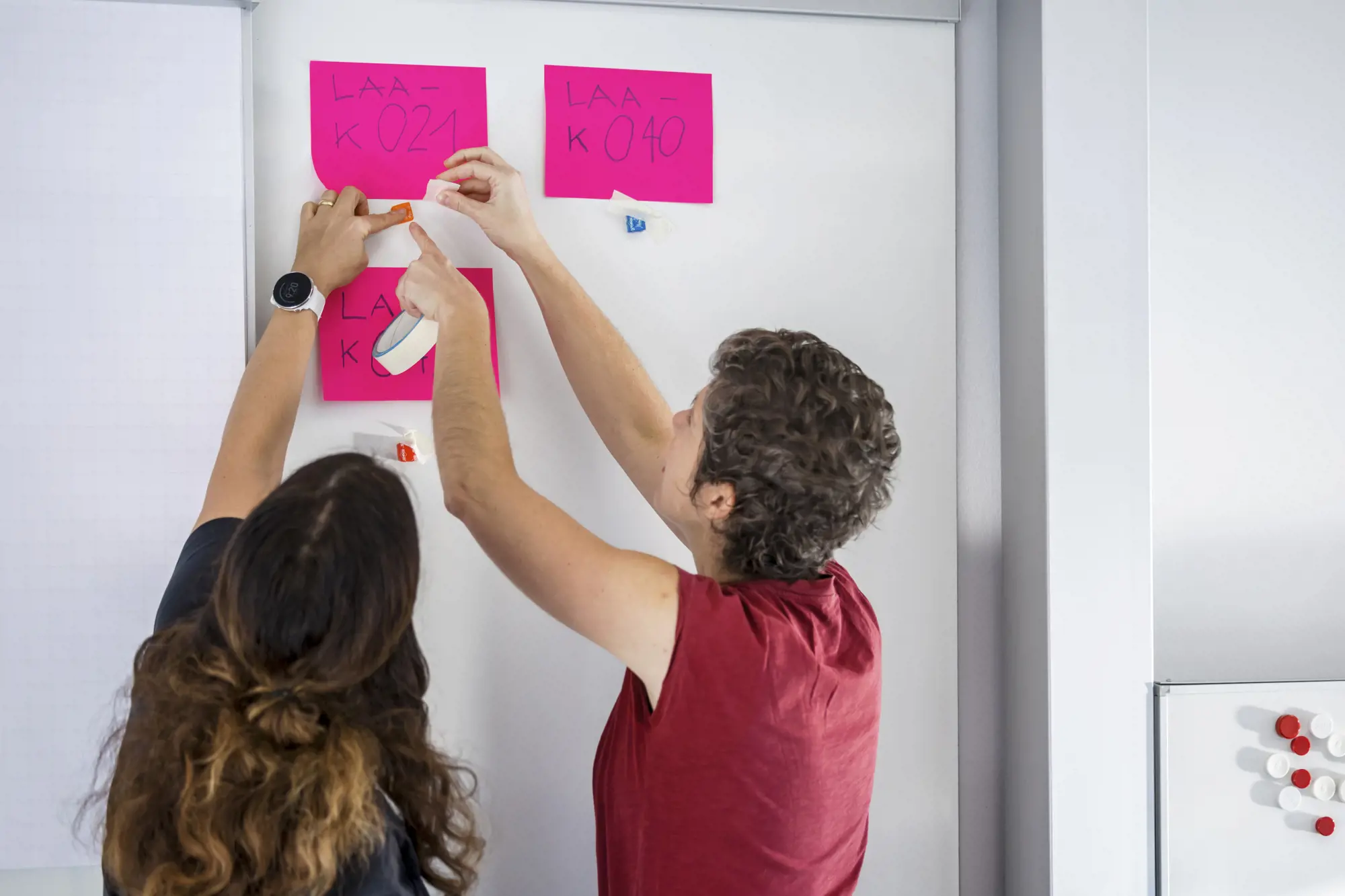
Social changes such as digitalisation, cultural diversity and sustainability have a direct impact on schools, constantly presenting them with new challenges and expectations. Key questions in school improvement research include the extent to which schools receive support in terms of education policy, how they respond to these new expectations, how they deal with them, and how they shape their own development.
A particular focus is on understanding the links between research and school practice, thereby supporting school improvement through research. Various forms of collaboration are explored with schools and other stakeholders in the education sector. Participatory research approaches are often employed in this context. The Centre for School Improvement bridges the gap between research and school practice, not only supporting development processes but also subjecting them to critical scrutiny.
Research focuses
Inclusion and participation
The research focus on inclusion and participation examines how inclusion and participation are implemented in schools, as well as how inclusive and participatory practices can be promoted within the school sector. This intertwines the themes of school improvement, inclusion and participation: student participation is understood as an approach that can be integrated into change processes in schools by designing school improvement processes in a participatory manner and enabling pupils to have a say in the process. The Centre for School Improvement investigates which concrete implementation options can be developed for this purpose and what reactions they elicit from those involved.
In the thematic area of inclusion, research focuses on how various stakeholders in the school sector cooperate to advance inclusive school improvement.
Projects in progress
Completed projects
Inclusion and participation
The research focus on inclusion and participation examines how inclusion and participation are implemented in schools, as well as how inclusive and participatory practices can be promoted within the school sector. This intertwines the themes of school improvement, inclusion and participation: student participation is understood as an approach that can be integrated into change processes in schools by designing school improvement processes in a participatory manner and enabling pupils to have a say in the process. The Centre for School Improvement investigates which concrete implementation options can be developed for this purpose and what reactions they elicit from those involved.
In the thematic area of inclusion, research focuses on how various stakeholders in the school sector cooperate to advance inclusive school improvement.
Projects in progress
Completed projects
Art education
The research focus on art education examines the role of aesthetic and art practices in school improvement processes. The starting point is a broader understanding of art that takes into account the diverse lived experiences and worlds of students.
The focus is on the question of to what extent and under what conditions art projects and aesthetic practices contribute to school improvement and how they relate to school objectives. The research analyses which new routines are becoming established in everyday school and classroom life, how forms of collaboration between teachers and external cultural mediators, as well as student participation, are changing, and which temporal and spatial structures are emerging and becoming firmly established.
Projects in progress
Completed projects
Outdoor learning and education for sustainable development (ESD)
Outdoor learning – understood as curriculum-based teaching outside the school building – is gaining increasing importance and is being implemented by a growing number of schools. It offers a wide range of opportunities to support both subject-specific and cross-curricular learning, to advance ESD, and to strengthen key competences and the well-being of learners and teachers. At the same time, its implementation presents schools with challenges. The Centre for School Improvement supports schools in addressing these challenges through research, data collection within the respective school, and the use of these data for ongoing development. Furthermore, it contributes to the further development of outdoor learning.
Projects in progress
Completed projects
Professional ethics
The research focus on professional ethics examines the mechanisms through which teachers respond in their practice to challenging situations characterised by conflicting and mutually exclusive demands. In doing so, pedagogical ethics is made empirically accessible as a social practice by reconstructing experience-based and intuitive ethical practices. In this way, pedagogical ethos becomes an integral part of reconstructive professionalisation research and habitus research in the context of teacher education. This fundamental research contributes to a better understanding of ethical action and helps to make this understanding fruitful for the initial and continuing professional development of teachers.
Projects in progress
Publications
2025
Alirezabeigi, S. and Decuypere, M. (2025) Evaluating datafied time: exploring the multiple temporalities induced by digital assessment.
Critical Studies in Education, 1–16.
Brückel, Frank, Julia Häbig, Reto Kuster and Heike Beuschlein (2025) Gemeinsam inklusionsorientierte und bildungsgerechte Schulgemeinschaften gestalten: Wie Schulen, Hochschulen und Bildungsbehörden in einer multiprofessionellen Lerngemeinschaft inklusive Schulentwicklung voranbringen.
#schuleverantworten 5(1): 6–13.
Datnow, Amanda, Enikö Zala-Mezö, Nora Turriago and Benjamin C. Kennedy (2025) Power and Voice in Research-Practice Partnerships: A Cross-National Study of RPP Meetings.
Journal of Educational Change 26: 425–50.
Decuypere, M., Brandau, N., Hartong, S., Joecks, L., Ortegon, C., Loft-Akhoondi, A., Tierens, T., Vanermen, L. (2025) Tracing the infrastructural unfolding of (edtech) events through hybrid team ethnography.
Learning Media And Technology online first
Müller-Kuhn, Daniela (2025) Pioneers without Support? A Systematic Literature Review about Outdoor Education in Secondary Schools.
Social Sciences & Humanities Open 12: 102224.
Ortegón, Carlos, Mathias Decuypere and Ben Williamson (2025) «Enthuse and Inspire»: Edtech Brokers and the Affective Construction of Teacher Innovation.
International Studies in Sociology of Education: 1–17.
Tierens, Toon, Mathias Decuypere, Sigrid Hartong and Samira Alirezabeigi (2025) Pedagogical Attachments and Virtual Reality: On Immersion with Digital Technology in School.
Critical Studies in Education: 1–19.
Tierens, Toon, Mathias Decuypere, Sigrid Hartong and Samira Alirezabeigi (2025) Schooling the (Artificially) Intelligent Writer: GenAI Technologies as Thinking Infrastructures in School Education.
Postdigital Science and Education 7: 1250–69.
Totter, Alexandra, Reto Wegmüller and Enikö Zala-Mezö (2025) Eine Berufsfachschule nimmt sich unter die Lupe.
Transfer. Berufsbildung in Forschung und Praxis 10(11): 1–11.
Totter, Alexandra (2025) Ein mehrperspektivischer und modularer Ansatz.
Zeitschrift für Evaluation 24(2): 219–44.
2024
Decuypere, M.; Hartong, S.; Brandau, N.; Joecks, L.; Loft-Akhoondi, A.; Ortegón, C.; Vanermen, L. (2024) Maneuvering constellations of valuation: a critical investigation of the edtech startup sector.
Critical Studies in Education, 1–20.
Müller-Kuhn, Daniela, Alexandra Totter, Julia Häbig, and Enikö Zala-Mezö (2024) Lehrpersonen in Schulpraxis und Forschung – Eine Analyse der Zusammenarbeit im Schulentwicklungsprojekt PASUS.
Erziehung und Unterricht, 174 (3–4), 352–359.
Totter, Alexandra, Marlies Keller-Lee, and Christine Rast (2024) Digitale Mediennutzung von Schülerinnen und Schülern im Fremdsprachenunterricht der Primarschule.
Zeitschrift für Grundschulforschung, Volume 17, pages 21–38.
Bernhardsson-Laros, N. (2024) Spannungen zwischen Theorie und Praxis in der Erwachsenen- und Weiterbildung. Relationierungen im Rahmen einer habitualisierten ethischen Reflexivität.
In: Hessische Blätter für Volksbildung, Themenheft Erwachsenenbildung als Wissenschaft, 74/3, 60–74.
Zala-Mezö, Enikö and Amanda Datnow (2024) Discourse in Research-Practice Partnership Meetings: A Comparison of Conditions Across Contexts.
AERA Open 10 (1): 1–18.
Brückel, Frank, Rachel Guerra, Reto Kuster, Susanna Larcher, Regula Spirig and Heike Beuschlein (2024) Prozessgestaltung in Theorie und Praxis: Das Schulentwicklungsrad – ein Modell für die praktische Schulentwicklungsarbeit.
#schuleverantworten 4 (2): 53–61.
Burri, Eliane (2024) Digitale Transformation – wer gestaltet den Wandel an Schulen? Eine Fallstudie zu Akteur*innen in der digitalen Schulentwicklung.
#schuleverantworten 4 (2): 6–16.
Decuypere, Mathias and Antti Saari (2024) Governing by Prototype and Proto-Practice: Topological Configurations of Future Classroom Labs.
Journal of Education Policy 39 (2): 1–19.
Decuypere, Mathias, and Steven Lewis (2024) Platformed Professionalities: What Digital Platforms Do to Teacher Professionality.
In: World Yearbook of Education 2025. The Teaching Profession in a Globalizing World: Governance, Career, Learning, hrsg. von Xavier Dumay, Tore Bernt Sorensen und Lynn Paine, 179–95. New York: Routledge.
Förschler, Annina and Mathias Decuypere (2024) Where are we heading? Hackathons as a new, relational form of policymaking.
Journal of Education Policy 39 (4): 519–40.
Hartong, Sigrid, Mathias Decuypere and Steven Lewis (2024) Disentangling the Temporalities of Digital and Predictive Governance: Rhythmanalysis as a Methodological Framework.
Time & Society 0 (0): 1–24.
Held, Tanja and Mathias Mejeh (2024) Students’ motivational trajectories in vocational education: Effects of a self-regulated learning environment.
Heliyon 10 (8): 1–18.
Lieger, Catherine and Natalie Geiger (2024) Spiel-Räume schaffen: Wie das Projekt “Spielen Plus” die Transformation entlang gesellschaftlicher und pädagogischer Veränderungen im Zyklus 1 positiv beeinflussen kann.
#schuleverantworten 4 (2): 1–6.
Mejeh, Mathias and Carmen Gähwiler (2024) Lerncoaching in der Berufsschule. Selbstwirksamkeit als zentrales Element Selbstregulierten Lernens fördern.
ZBW Zeitschrift für Berufs- und Wirtschaftspädagogik 120 (1): 89–114.
Mejeh, Mathias and Martin Reh (2024) Taking adaptive learning in educational settings to the next level: leveraging natural language processing for improved personalization.
Educational Technology Research and Development 72 (3): 1597–621.
Mejeh, Mathias, Livia Sarbach and Tina Hascher (2024) Effects of Adaptive Feedback through a Digital Tool – A Mixed-Methods Study on the Course of Self-Regulated Learning.
Education and Information Technologies 29: 1–43.
Müller-Kuhn, Daniela, Andrea Fiedler and Ingmar Schumacher (2024) Ebener Weg oder steiniger Pfad? Die Rolle der Schulleitung bei der Förderung von Draussenlernen.
#schuleverantworten 4 (2): 62–70.
Ñañez, Paola, Mathias Decuypere and Sigrid Hartong (2024) Unpacking the Contextualities of Behavioural Public Policy: A Case Study of the Peruvian Nudge Unit MineduLAB.
Journal of Social Policy: 1–17.
Ortegón, Carlos, Mathias Decuypere and Ben Williamson (2024) Mediating Educational Technologies: Edtech Brokering between Schools, Academia, Governance, and Industry.
Research in Education 120 (1): 35–53.
Schuster, Johannes, Julia Hugo, Nina Bremm, Nina Kolleck and Enikö Zala-Mezö (2024) Wissensproduktion, Wissensmobilisierung und Wissenstransfer: Chancen und Grenzen der Entwicklung von Wissenschaft und Praxis.
Leverkusen: Verlag Barbara Budrich.
Tierens, Toon, Mathias Decuypere and Sigrid Hartong (2024) Navigating Open-Source Platforms in Schools: An Inquiry into Changing Teacher Professionality.
Learning, Media and Technology 49: 1–15.
Totter, Alexandra and Rico Cathomas (2024) Entwicklungs- und Forschungsperspektiven in und über Minderheiten-Sprachlehrmittel am Beispiel des neuen rätoromanischen Sprachlehrmittels in der Schweiz.
In: Putting Knowledge(s) into Perspective: Wissen, Reflexivität und Multi-(Perspektivität) in Bildungsmedien, hrsg. v. Katharina Poltze und Birte Schröder, 205–23. Göttingen: V&R Unipress.
Vanermen, Lanze, Joris Vlieghe and Mathias Decuypere (2024) Learning to Dashboard: Modes of Producing and Deploying Data Visualising Technologies in Higher Distance Education.
Discourse: Studies in the Cultural Politics of Education: 1–18.
2023
Bernhardsson-Laros, N. & Schrewe, N. (2023) Pandemiebezogene Handlungsorientierungen, persönlicher Habitus und konjunktive Erfahrungsräume – Zum Umgang der Bevölkerung mit der Corona-Massenerziehung.
In: D. Klinge, A.-M. Nohl & B. Schäffer (Hrsg.), Pädagogik des gesellschaftlichen Ausnahmezustandes. Erziehung Erwachsener in der Corona-Pandemie (S. 369–416). Wiesbaden: Springer VS.
Bernhardsson-Laros, Nils (2023) Dokumentarische Methode.
In: M. Kondratjuk (Hrsg.). Grundlagen der Erwachsenen- und Weiterbildungsforschung. Bielefeld: wbv, 97–98.
Metzger Susanne, Alexandra Totter and Daniela Müller-Kuhn (2023) Praktisch-naturwissenschaftliches Arbeiten mit einem neuen Lehrmittel: Alles neu oder alles beim Alten?
Progress in Science Education (PriSE) 6 (1): 56–68.
Brückel, Frank, Rachel Guerra, Reto Kuster, Susanna Larcher, Regula Spirig and Heike Beuschlein (2023) Schulentwicklung – gemeinsam unterwegs. Veränderungsprozesse analysieren, planen und reflektieren.
Bern: Hep-Verlag.
Kuster, Reto and Frank Brückel (2023) Wir sind nicht der richtige Ort für diese Kinder! Orientierung im Führungsalltag bei komplexen Schulentwicklungsfragen am Beispiel Inklusion.
Lernende Schule 104: 25–26.
Totter, Alexandra, Daniela Müller-Kuhn, Marlies Keller-Lee and Christine Rast (2023) Digitales Schulbuch zwischen Nutzungspotenzial und Nutzungspraxis.
MedienPädagogik: Zeitschrift für Theorie und Praxis der Medienbildung 20: 527–50.
Brückel, Frank, Heike Beuschlein and Rachel Guerra (2023) Mehrebenensystem Schule.
In: Schulentwicklung – gemeinsam unterwegs. Veränderungsprozesse analysieren, planen und reflektieren, hrsg. von Frank Brückel, Rachel Guerra, Reto Kuster, Susanna Larcher, Regula Spirig und Heike Beuschlein, 41–84. Bern: Hep-Verlag.
Brückel, Frank and Rachel Guerra (2023) Lernen der Schüler:innen. Das Kerngeschäft und seine Facetten.
In: Schulentwicklung – gemeinsam unterwegs. Veränderungsprozesse analysieren, planen und reflektieren, hrsg. von Frank Brückel, Rachel Guerra, Reto Kuster, Susanna Larcher, Regula Spirig und Heike Beuschlein, 27–40. Bern: Hep-Verlag.
Brückel, Frank, Reto Kuster, Rachel Guerra and Regula Spirig (2023) Lernen in Tagesschulen ist mehr als Lernen im Unterricht.
In: Leadership for Learning – gemeinsam Schulen wirksam gestalten, hrsg. von Niels Anderegg, Angelika Knies, Livia Jesacher-Rössler und Johannes Breitschaft, 293–312. Bern: Hep-Verlag.
2022
Bernhardsson-Laros, N. & Fuhr, T. (2022) Lessons Learned. Zur Etablierung einer Bereichsethik in der Erwachsenen- und Weiterbildung. Was wir von internationalen Vorläuferstudien lernen können.
In: A. Grotlüschen, et al. (Hrsg.), Erwachsenenbildung in internationaler Perspektive. Grenzen und Chancen. Leverkusen-Opladen: Budrich, S. 46–59.
Häbig Julia, Enikö Zala-Mezö, Jaël Omlin, Alexandra Totter, Frank Brückel and Daniela Müller-Kuhn (2022) Schule gemeinsam mit Lernenden gestalten: Partizipative Prozesse in der Schulentwicklung.
In: #schuleverantworten: führungskultur_innovation_autonomie 2: 7–17.
Müller-Kuhn Daniela and Julia Häbig (2022) Partizipation, Mitbestimmung, Beteiligung …? Eine begriffliche Differenzierung und damit verbundene Problematiken.
In: Mitbestimmung von Kindern: Grundlagen für Unterricht, Schule und Hochschule,hrsg. v. Miriam Grüning, Sabine Martschinke, Julia Häbig und Sonja Ertl, 56–73.
Müller-Kuhn Daniela and Julia Häbig (2022) Begleitevaluation der WWF-Aktionswochen “Ab in die Natur – draussen unterrichten” von 2018 bis 2021.
Abschlussbericht. Zürich: Pädagogische Hochschule Zürich.
Müller-Kuhn Daniela, Jaël Omlin and Enikö Zala-Mezö (2022) Evaluation Schulinsel Primarschule Emmersberg.
Abschlussbericht. Zürich: Pädagogische Hochschule Zürich.
Totter, Alexandra, Christine Rast and Marlies Keller-Lee (2022) Wortschatzlernen mit digitalen Tools des Französischlehrmittels “dis donc!”.
Babylonia, 1, 32–37.
Zala-Mezö Enikö, Johanna Egli und and Häbig (2022) “Wir sind auf gutem Weg und müssen eigentlich nicht wahnsinnig viel verändern, oder?” – Beschreibung von schulischen Entwicklungsprozessen im dokumentarischen Längsschnitt.
ZISU: Zeitschrift für interpretative Schul- und Unterrichtsforschung 11(1): 81–96.
Zala-Mezö Enikö, Johanna Egli and Julia Häbig (2022) Zwischen Ablehnung und Befürwortung. Schulische Positionierungen zur Nutzung digitaler Medien vor dem Hintergrund des Corona-Lockdowns.
MedienPädagogik: Zeitschrift für Theorie und Praxis der Medienbildung 49 (Schulentwicklung), 48–67.
Zala-Mezö Enikö and Johanna Egli (2022) Switzerland the Individualist – A Classification with Some Colorings.
In: The Emerald handbook of evidence-informed practice in education: learning from international contexts, hrsg. v. Chris Brown und Joel R. Malin, 303–314. Bingely: Emerald Publishing.
Zala-Mezö Enikö and Daniela Müller-Kuhn (2022) “Im Wald muss man einfach viel mehr vertrauen” – Erfahrungen von Lehrpersonen mit Draussenunterricht.
In: Draussenlernen: Neue Forschungsergebnisse und Praxiseinblicke für eine Bildung für Nachhaltige Entwicklung, hrsg. v. Jakob von Au und Rolf Jucker, 343–363. Bern: Hep-Verlag.
2021
Büker Petra, Birgit Hüpping and Enikö Zala-Mezö (2021) Partizipation als Veränderung: Eine Aufforderung an Grundschule und Forschung.
Zeitschrift für Grundschulforschung 14(2): 391–406.
Häbig Julia, Enikö Zala-Mezö, Pascale Herzig and Daniela Müller-Kuhn (2021) Participation and Social Exclusion – Are They Mutually Exclusive Phenomena?
In: Children’s Rights from International Educational Perspectives: Wicked Problems for Children’s Education Rights, hrsg. v. Jenna J. Gillett-Swan und Nina Thelander, 129–143. Cham: Springer International Publishing.
Müller-Kuhn Daniela, Pascale Herzig, Julia Häbig and Enikö Zala-Mezö (2021) Student Participation in Everyday School Life – Linking Different Perspectives.
Zeitschrift Für Bildungsforschung 11(1).
Müller-Kuhn Daniela, Enikö Zala-Mezö, Julia Häbig, Nina-Cathrin Strauss and Pascale Herzig (2021) Five Contexts and Three Characteristics of Student Participation and Student Voice – A Literature Review.
International Journal of Student Voice 6(2): 1–30.
Totter, Alexandra und Johanna Egli (2021) Reflexion mittels E-Portfolio. Ein Beispiel der Online-Reflexionspraxis angehender Lehrpersonen während ihrer berufspraktischen Ausbildung.
Journal für LehrerInnenbildung jlb 01-2021 Mythos Reflexion, 46–55.
Zala-Mezö Enikö, Julia Häbig, Johanna Egli, Daniela Müller-Kuhn and Nina-Cathrin Strauss (2021) Schulinterne Aushandlung der Anforderung, Lernende partizipieren zu lassen: Welche Schulentwicklungschancen entstehen?
In: Dokumentarische Methode in der Schulentwicklungsforschung, hrsg. von Enikö Zala-Mezö, Julia Häbig und Nina Bremm, 123–142. Münster: Waxmann.
Zala-Mezö Enikö, Alexandra Totter and Julia Häbig (2021) Schulbuch – Entstehung, Rolle und Bedeutung für Unterricht und Schule.
In: Unterstützungssysteme für Schule. Konzepte, Befunde und Perspektiven, hrsg. v. Tanja Webs und Veronika Manitius, 105–122. Bielefeld: wbv Publikation.
2020
Müller-Kuhn Daniela, Julia Häbig, Enikö Zala-Mezö, Nina-Cathrin Strauss and Pascale Herzig (2020) “So richtig Einfluss auf den Unterricht haben wir nicht”: Wie Schülerinnen und Schüler Partizipation wahrnehmen.
In: Partizipation und Schule, hrsg. v. Sabine Gerhartz-Reiter und Cathrin Reisenauer, 187–206. Wiesbaden: Springer VS.
Totter, Alexandra, Julia Häbig, Daniela Müller-Kuhn, Enikö Zala- Mezö (2020) Zwischen traditionellem Schulbuch und hybridem Lehrmittel. Bedingungen, Möglichkeiten und Herausforderungen von Lernen und Lehren in einer digitalen Welt.
Zeitschrift MedienPädagogik 17 (Jahrbuch Medienpädagogik), 169–193.
Zala-Mezö Enikö, Amanda Datnow, Daniela Müller-Kuhn and Julia Häbig (2020) Feeding back research results: Changes in principal and teacher narratives about student participation.
Studies in Educational Evaluation 65: 1–10.
Zala-Mezö Enikö, Julia Häbig, Reto Kuster, Daniela Müller-Kuhn and Pascale Herzig (2020) Rückmeldung von Forschungsergebnissen als Möglichkeit für Partnerschaft zwischen Praxis und Forschung.
Journal für Schulentwicklung 3: 1–6.
Doctoral theses
Collaboration Between School and Research in the Context of Research-Practice Partnerships: A Practice-Theoretical Analysis Through Four Approaches
Doctoral thesis by: Roxanne Stoffel
Topic: Discourse practices in research-practice partnerships
Funded by: PH Zurich
Supervisors: Kathrin Racherbäumer (University of Siegen) and Enikö Zala-Mezö (PHZH)
Cooperation initiatives
Ethics in Participatory Research with Children (2022–2025)
Research with pupils can be classified as a particularly distinctive form of school participation. The approach is, however, controversial and raises ethical questions, which the network is addressing.
The network has three objectives:
-
The development of ethical guidelines for participatory research with children and young people.
-
The network will develop professionalisation prospects for adult researchers conducting participatory research and conceptualise the empowerment of pupils for participatory research in the sense of “pedagogy of research or research-based learning”.
-
Joint research projects are to be identified and applied for.
The network will be funded by the German Research Foundation (DFG) from mid-2022 to mid-2025.