Science education
Auch auf Deutsch verfügbar
Content of this page
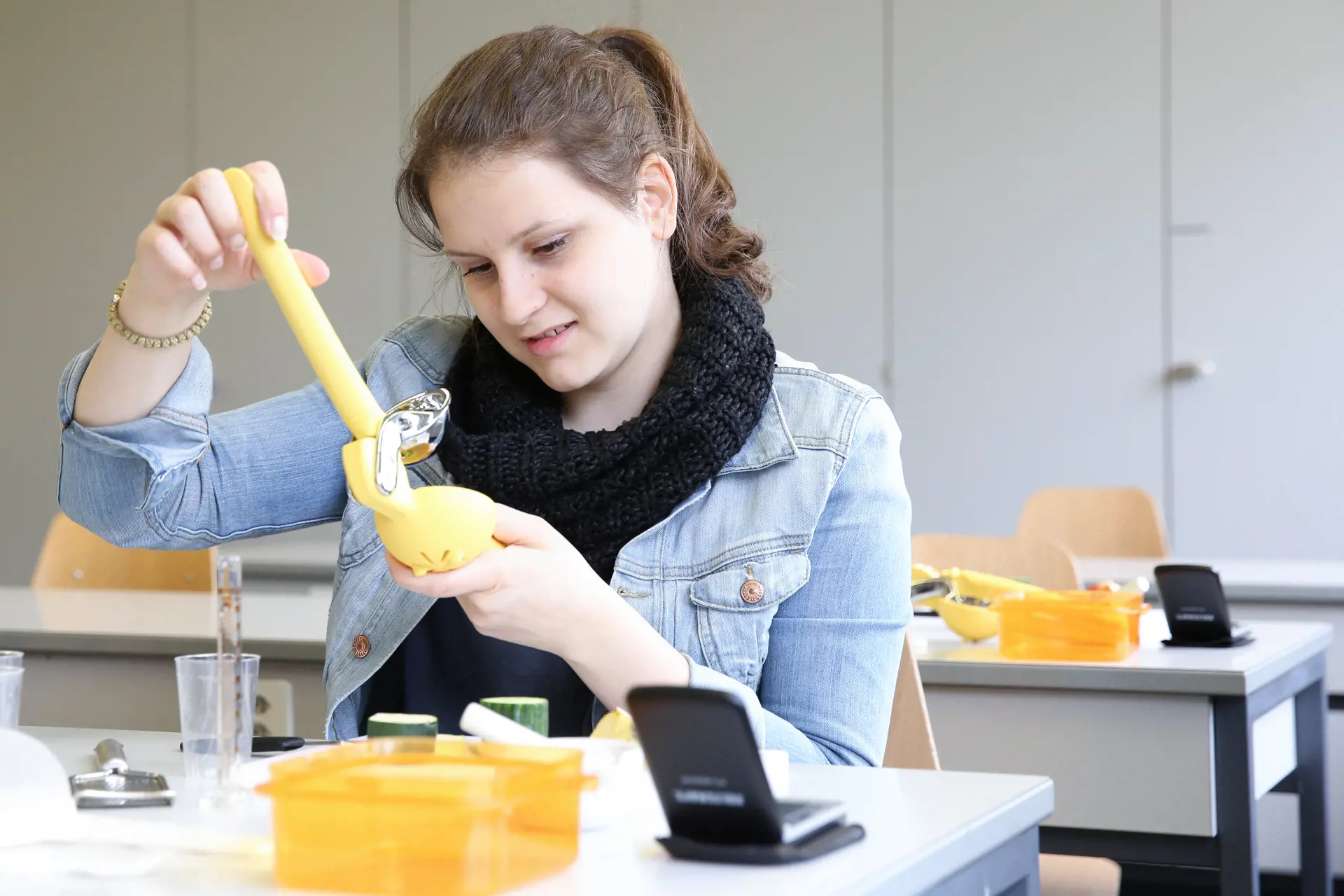
The aim of the research activities is to emphasise the relevance of the natural sciences as a lifeworld-relevant learning area, one that schools can only introduce, but that is important throughout our lives. The focus is on skills for gaining scientific knowledge, which are of increasing importance for school pupils in a world shaped by science and technology. The aim of teaching the natural sciences – and thus also indirectly of the research – is to ensure that young people have the confidence to experience, explore and consciously shape their environment and to spark their curiosity about new things.
The Science Education Research Group understands natural sciences education as an independent research discipline that opens up its own field with its own theories and methods. At the same time, as a science that teaches, it necessarily refers to the findings from other academic disciplines, such as scientific subjects, educational sciences or teaching-and-learning psychology.
Research focuses
Science education at PH Zurich focuses on the teaching and learning processes of scientific knowledge acquisition in the classroom (e.g. experimentation and practical work, teaching and assessment) as well as on the professionalisation of science teachers (development and evaluation of training offers in the course of initial training and continuing education, assessment of planning and reflection skills). These thematic focuses reflect an international prioritisation of research interests that have emerged as a result of the introduction of competency-based educational standards for teaching. The dynamic development of the natural sciences pedagogies as research disciplines means that the thematic focuses set at PH Zurich are also open to development and, if necessary, new challenges in science teaching and learning can be addressed.
Scientific knowledge acquisition and experimentation
This thematic focus deals with the question of how skills for acquiring knowledge can be taught in science lessons in such a way that school pupils can optimally develop their potential.
The focus here is on the problem-type approach and the sub-process approach. The first approach assumes that science teaching should promote the examination of representative problem types in order to facilitate the transfer to similar challenging situations, whereas the second approach focuses on prototypical sub-steps, the overall process of which represents an ideal type of scientific knowledge acquisition and is thus suitable for establishing a skill.
Professionalisation, professional knowledge and transfer research
In this research area, planning, teaching and reflection skills in pedagogy, as well as the pedagogical knowledge of teachers in training are studied with the help of interviews and teaching videos.
Aspects of gender sensitisation for eliciting and dealing with student and school pupil perceptions and for experimentation in the classroom are considered. Effectiveness research into teacher training is being examined in various projects in terms of different outcome variables (e.g. subject knowledge, pedagogical knowledge, instructional actions, developing perceptions of teaching).
Interdisciplinary pedagogy and transfer research
The development of subject-specific pedagogies into independent academic teaching and research disciplines is leading to increasingly differentiated insights into the effects of subject teaching. Research has reached a level that raises the question of the extent to which the individual pedagogies can learn from each other in terms of research methodology and theory-building. In the collaboration between subject-specific educational master’s programmes at PH Zurich (German Language Education; Mathematics Education; Science Education; Religions, Cultures and Ethics Network) and the University of Teacher Education Lucerne (History Education, NMG-BE), initial theoretical works on interdisciplinary pedagogy have been completed on certain topics (for example, argumentation in the subjects).
Other projects
Publications
2025
Emden, Markus and Christina Colberg (2025) Die naturwissenschaftsbezogenen Arbeitsweisen im Lehrplan 21.
Progress in Science Education (PriSE) 8(2): 19–36.
Emden, Markus, Arne Bewersdorff and Armin Baur (2025) Assessing Professional Development on Experimentation as a Method of Inquiry-Based Science Teaching: Framework and Principal Results.
Science Education 109: 1257–86.
Furrer, Florian, Christoph Gut, Knut Neumann, Annabel Oehen, Josiane Tardent and Markus Wilhelm (2025) Beurteilung der Dimensionalität und strukturellen Stabilität der Reflexionsfähigkeit angehender Naturwissenschaftslehrkräfte.
Zeitschrift für Didaktik der Naturwissenschaften 31(12).
Gut, Christoph and Josiane Tardent (2025) Analytisches Argumentieren im Naturwissenschaftsunterricht.
Plus Lucis 2: 17–21.
Murer, Livia, Susanne Metzger, Andreas Vorholzer, Angela Bonetti and Christoph Gut (2025) Vergleich verschiedener Erhebungsmethoden zur Erfassung von Kompetenzen im Bereich des naturwissenschaftlichen Messens bei Tests mit Realexperimenten.
Zeitschrift für Didaktik der Naturwissenschaften 31(8).
2024
Colberg, Christina, Andras Müller, Josiane Tardent Kuster, Lars-Jochen Thoms and Matthias von Arx (2024) Positionspapier zu naturwissenschaftlicher Bildung und Lehrpersonenausbildung.
Progress in Science Education 7 (2): 31–63.
Emden, Markus, Frank Hannich, Armin Duff, Tania Kaya, Lara Leuschen and David Nef (2024) Ausserschulisches Lernen mit dem Regelunterricht verknüpfen? Zur Entwicklung einer Lehrpersonenweiterbildung zwischen Fachdidaktik, Customer Management und Science Center.
BzL – Beiträge zur Lehrerinnen- und Lehrerbildung 42 (2): 216–31.
Fleischmann, Jürg Josef (2024) Vorstellungen von Physiklehramtsstudierenden zur Physik der einfachen Maschinen.
Dissertation, Pädagogische Hochschule Ludwigsburg.
Lanka, Judith, Pitt Hild and Anna Beniermann (2024) Fit to Teach Evolution? Pre- and in-Service Teachers’ Knowledge and Acceptance of Evolution.
International Journal of Science Education: 1–26.
Martarelli, Corinna, Josua Dubach, Natalie Schelleis, Trix Cacchione and Sebastian Tempelmann (2024) Virtual reality in primary science education: improving knowledge of the water cycle.
Educational Technology Research and Development: 1–26.
Tardent, Josiane and Christoph Gut (2024) Professionswissen zur Gendersensibilisierung – Konzeption eines Messinstruments und exemplarische Ergebnisse von Studierenden der Pädagogischen Hochschule Zürich.
In: Gendersensibilisierung in der Ausbildung von Natur- und Techniklehrpersonen, hrsg. v. Dorothee Brovelli, Matthias Hoesli und Melanie Elderton, 74–94. Bern: Hep-Verlag.
2023
Gut, Christoph und Josiane Tardent (2023) Naturwissenschaftlich-Technisches Handeln. Kompetenzmodell und praktische Lernaufgaben für die Sekundarstufe I.
Bern: Hep-Verlag.
Detken, Franziska (2023) Young children’s ideas of energy compared with the scientific energy concept: Results of a video study with interviews about children’s own drawings.
Frontiers in Education 8: 1–17.
Eberz, Sarah, Sandra Lang, Petra Breitenmoser und Kai Niebert (2023) Taking the Lead into Sustainability: Decision Makers’ Competencies for a Greener Future.
Sustainability 15: 49–86.
Gut, Christoph (2023) Perspektiven einer die Schulsprachdidaktik und die Naturwissenschaftsdidaktik verknüpfenden Lehr- und Lernforschung – ein theoriebildender Essay.
Beiträge zur Lehrerinnen- und Lehrerbildung 41 (2): 216–30.
Haltenberger, Melanie, Inga Gryl, Karin Huser, Julia Wiedmann, Jana Pokraka und Thomas Jekel (2023) Die geographische Perspektive im Perspektivrahmen Sachunterricht der GDSU.
Zeitschrift GW-Unterricht 170: 33–37.
Huser, Karin und Roger Keller (2023) Nachhaltige Landschaftsentwicklungen an Hoch-/Schulen fördern. Ein Umsetzungsbeispiel im Studiengang Primarstufe.
PriSE – Professionalisierung von Lehrpersonen für die Umsetzung von Bildung für Nachhaltige Entwicklung (BNE) 6 (3): 36–51.
Lampert, Irene, Kai Niebert und Markus Wilhelm (2023) Instructional guidelines based on conceptions of students and scientists about economic and population growth within planetary boundaries.
International Journal of Science and Mathematics Education 20: 1315–36.
Reuschenbach, Monika, Tobias M. Schifferle und Pascal Tschudi (2023) Projekt «GeoDigIT»: Digitale Medienkompetenzen in der Geografieausbildung an der PH Zürich.
Geoagenda 20 (1): 26–29.
Gut, Christoph, Josiane Tardent und Markus Wilhelm (2023) Fachdidaktisches Rahmenmodell der Erkenntnisgewinnung für das Naturwissenschaftlich-Technische Handeln (NTH).
In: Naturwissenschaftlich-Technisches Handeln. Kompetenzmodell und praktische Lernaufgaben für die Sekundarstufe I, hrsg. v. Christoph Gut und Josiane Tardent, 15–63. Bern: hep Verlag.
Gut, Christoph, Josiane Tardent and Markus Wilhelm (2023) Zur Lernwirksamkeit des praktischen Arbeitens im Naturwissenschaftsunterricht.
In: Naturwissenschaftlich-Technisches Handeln. Kompetenzmodell und praktische Lernaufgaben für die Sekundarstufe I, hrsg. v. Christoph Gut und Josiane Tardent, 64–89. Bern: hep Verlag.
Gut, Christoph, Josiane Tardent and Markus Wilhelm (2023) Planung und Gestaltung praktischer Lernaufgaben.
In: Naturwissenschaftlich-Technisches Handeln. Kompetenzmodell und praktische Lernaufgaben für die Sekundarstufe I, hrsg. v. Christoph Gut und Josiane Tardent, 90–120. Bern: hep Verlag.
2022
Schreiber Nico and Christoph Gut (2022)
Die Validierungspraxis bei hands-on Experimentiertests in der naturwissenschaftsdidaktischen Forschung - Ein Review auf Basis eines allgemeinen Ordnungssystems für Validierungsstudien.
Zeitschrift für Didaktik der Naturwissenschaften, 28, 8.
2021
Emden Markus (2021) Reintroducing “the” Scientific Method to introduce scientific inquiry in schools? A cautioning plea not to throw out the baby with the bathwater.
Science & Education, 30(5), 1037–1073.
Gut Christoph and Josiane Tardent (2021) Argumentieren im Naturwissenschaftsunterricht – Förderung und Beurteilung einer Basiskompetenz für die Erkenntnisgewinnung.
In: H. Lötscher, M. Naas & M. Roos (Hrsg.), Kompetenzorientiert beurteilen (S. 324–355). Bern: hep.
Wilhelm Markus, Dorothee Brovelli, Josiane Tardent and Christoph Gut (2021) Masterarbeiten als Teil naturwissenschaftsdidaktischer Forschungsprojekte - eine vielversprechende Möglichkeit, um Forschung und Lehre zu verbinden.
Beiträge zur Lehrerinnen- und Lehrerbildung, 39(2). 208–221.
2020
Baur Armin and Markus Emden (2020) How to open inquiry teaching? An alternative scaffold to foster students’ inquiry skills.
Chemistry Teacher International, 2, 1–12.
Baur Armin, Markus Emden and Arne Bewersdorff (2020) Welche Unterrichtsprinzipien sollten für den Aufbau von Kompetenzen zum Experimentieren Beachtung finden? Eine Ableitung auf Basis multiperspektivisch begründeter Unterrichtsziele.
Zeitschrift für Biologiedidaktik, 23, 10–24.
Bewersdorff Arne, Armin Baur and Markus Emden (2020) Analyse von Unterrichtskonzepten zum Experimentieren hinsichtlich theoretisch begründeter Unterrichtsprinzipien. Bestandsaufnahme und kriteriale Gegenüberstellung.
Zeitschrift für Biologiedidaktik, 24, 108–130.
Emden Markus, Arne Bewersdorff and Armin Baur (2020) Professional Development in the School Institute “Discovery Experimentation”. Framework and First Results.
Progress in Science Education, 3(2), 1–9.
Emden Markus and Mario Gerwig (2020) Can The Chemical History of a Candle Inform the Teaching of Experimentation? An Hermeneutic Approach Regarding the Potentials for Scientific Inquiry in a Proven Historical Exemplar.
Science & Education, 29(3), 589–616.
Gut Christoph, Josiane Tardent and Michael Prusse (2020) Der Joint-Masterstudiengang Fachdidaktik Naturwissenschaften der Pädagogischen Hochschule Zürich, der ETH Zürich und der Universität Zürich.
In: P. Breitenmoser, C. Mathis & S. Tempelmann (Hrsg.), Natur, Mensch, Gesellschaft (NMG). Standortbestimmung zu den sachunterrichtsdidaktischen Studiengängen der Schweiz (S. 203–213). Baltmannsweiler: Schneider-Verlag Hohengehren.
Hild Pitt, Alex Buff, Christoph Gut and Ilka Parchmann (2020) Adaptives kompetenzbezogenes Feedback beim selbstständigen praktisch-naturwissenschaftlichen Arbeiten.
Zeitschrift für Didaktik der Naturwissenschaften, 31(1).
Tardent Josiane, Markus Wilhelm and Christoph Gut (2020) Qualitätsvolle Unterrichtsplanung von angehenden Lehrpersonen zum experimentellen Handeln - auch eine Frage des Planungsmodells?
Beiträge zur Lehrerinnen- und Lehrerbildung, 38(2), 198–212.
Tardent Kuster Josiane (2020) Unterrichtsplanungen von angehenden Lehrpersonen zum experimentellen Handeln.
Heidelberg: Pädagogische Hochschule Heidelberg.
2019
Emden Markus, Arne Bewersdorff and Armin Baur (2019) Kann Experimentieren in der Schule bilden? Ein Beitrag zur Legitimation eines selbstverständlichen Gegenstandes des Naturwissenschaftsunterrichts.
Zeitschrift für Pädagogik, 65 (5), 710–729.
Hild Pitt, Christoph Gut and Maja Brückmann (2019) Validating performance assessments. Measures that may help to evaluate students’ expertise in “doing science”.
Research in Science & Technological Education, 37(4), 419–445.
Doctoral theses
Experimental skills in the natural sciences (ExKoNawi)
Doctoral thesis by: Angela Bonetti
Topic: This research project examines the extent to which a hands-on experimental test can be used to validly measure and dimensionally distinguish between three types of problems in scientific and technical activity.
Funded by: Swiss National Science Foundation (SNSF)
Supervisors: Christoph Gut-Glanzmann, Maik Walpuski (University of Duisburg-Essen)
Planning, teaching and reflecting in the natural sciences (Purpur)
Doctoral thesis by: Florian Furrer
Topic: This research project looks at how the skill of teachers in training to reflect on their own teaching changes when they “repeat lessons” with the same learning content (experimentation) but with a different contextual topic, and how this skill depends on personal variables.
Funded by: Swiss National Science Foundation (SNSF)
Supervisors: Christoph Gut-Glanzmann, Knut Neumann (University of Kiel)