Studies : New opportunities for teachers with refugee backgrounds
According to the State Secretariat for Migration (SEM), temporarily admitted persons, recognised refugees, persons in need of protection and stateless persons are all allowed to take up employment throughout Switzerland. This also applies to teachers with a foreign diploma. Nevertheless, very few of them work in their original profession, as the requirements for teachers, specifically in terms of language skills, are high. With the CAS Teaching with a Foreign Teaching Diploma, the Bern University of Teacher Education 2024 sought to support foreign teachers on their way to employment in schools in the canton of Bern. Swissuniversities, the umbrella organisation of Swiss universities, is also aware of the problem.
With the project «Requalification and Professional Integration of Teachers with Refugee Experience» (RILF), the aim is to develop targeted programmes for teachers with refugee backgrounds by 2028. The project is supported by project-related funds as part of the swissuniversities programme “Equal Opportunities – Promoting Equality, Diversity and Inclusion at all levels of Higher Education (2025–2028)”. To ensure sustainability, the bridge programme and accompanying measures are to be transferred to the regular structures of the participating universities of teacher education.
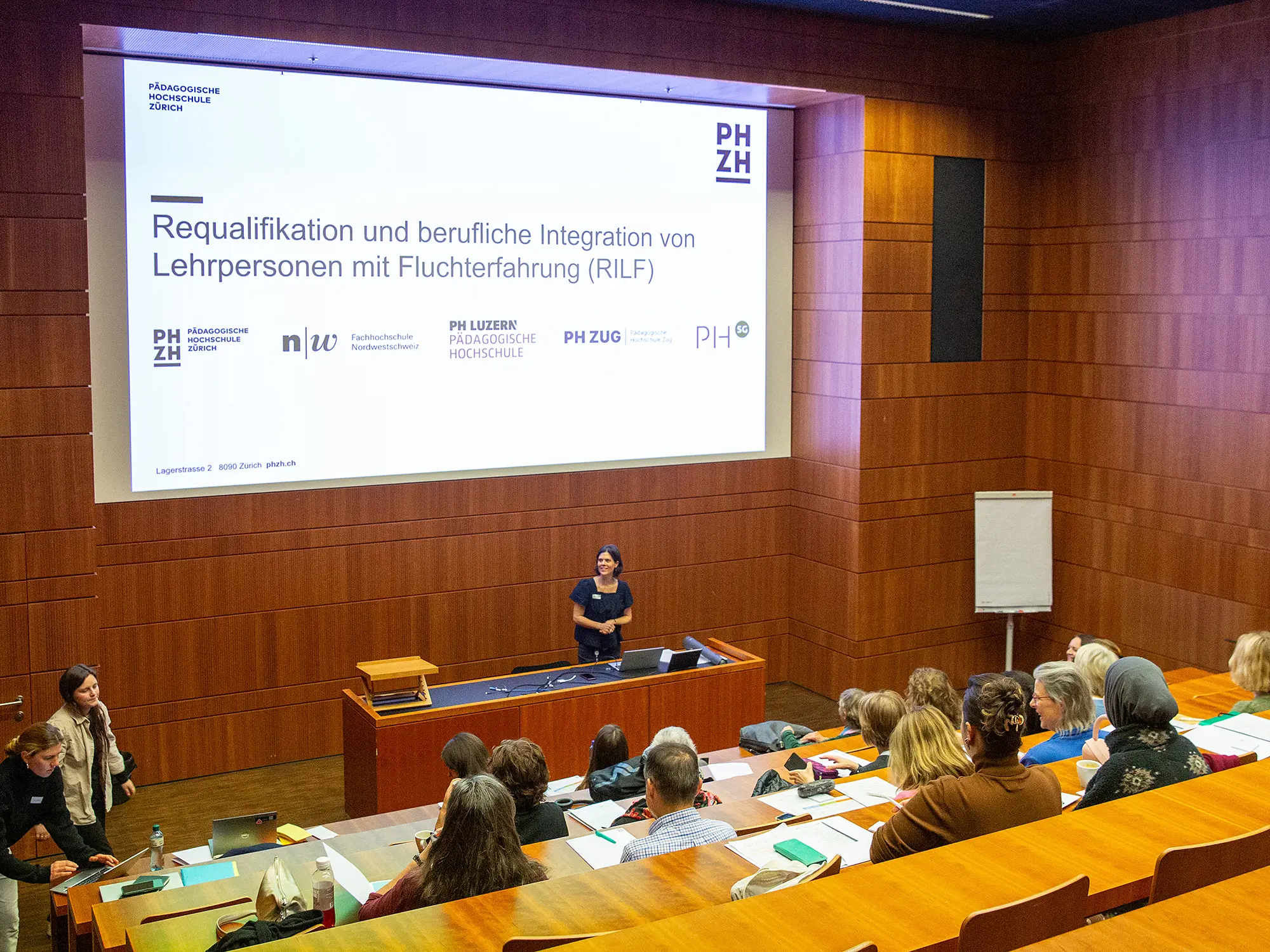
Sabrina Marruncheddu works as a lecturer at the Centre for Teaching and Transcultural Learning. Together with colleagues from the PH Zurich, PH Lucerne, PH St. Gallen, PH Zug and PH FHNW, she is involved in sub-project 2 “Bridge Programme” of RILF. This involves the development of a one-year programme to prepare an application for recognition of a foreign teaching diploma or – if the conditions for such a recognition are not met – a degree programme at a university of teacher education (regular or shortened). The bridge programme is scheduled to start in autumn 2026.
Sabrina Marruncheddu, what are the biggest challenges facing teachers with a refugee background in Switzerland?
The biggest challenges are learning German and getting their foreign qualifications recognised. To start teaching in a school or study at a university of teacher education, teachers need to have a C2 level of German and know the technical language used in education here. Mastering a language at this level takes time. But teachers with a refugee background are often not given this time because they are expected to find employment as quickly as possible. As a result, they are often pushed into other professions where language skills are less important. A federal study has shown that well-qualified recognised refugees and temporarily admitted foreigners «have virtually no chance in Switzerland of exploiting the potential they acquired in their country of origin (qualifications and professional experience) through recognition and credit transfer». The RILF project is part of the federal government’s efforts to counteract this dynamic.
What is the aim of the RILF project? What opportunities could arise?
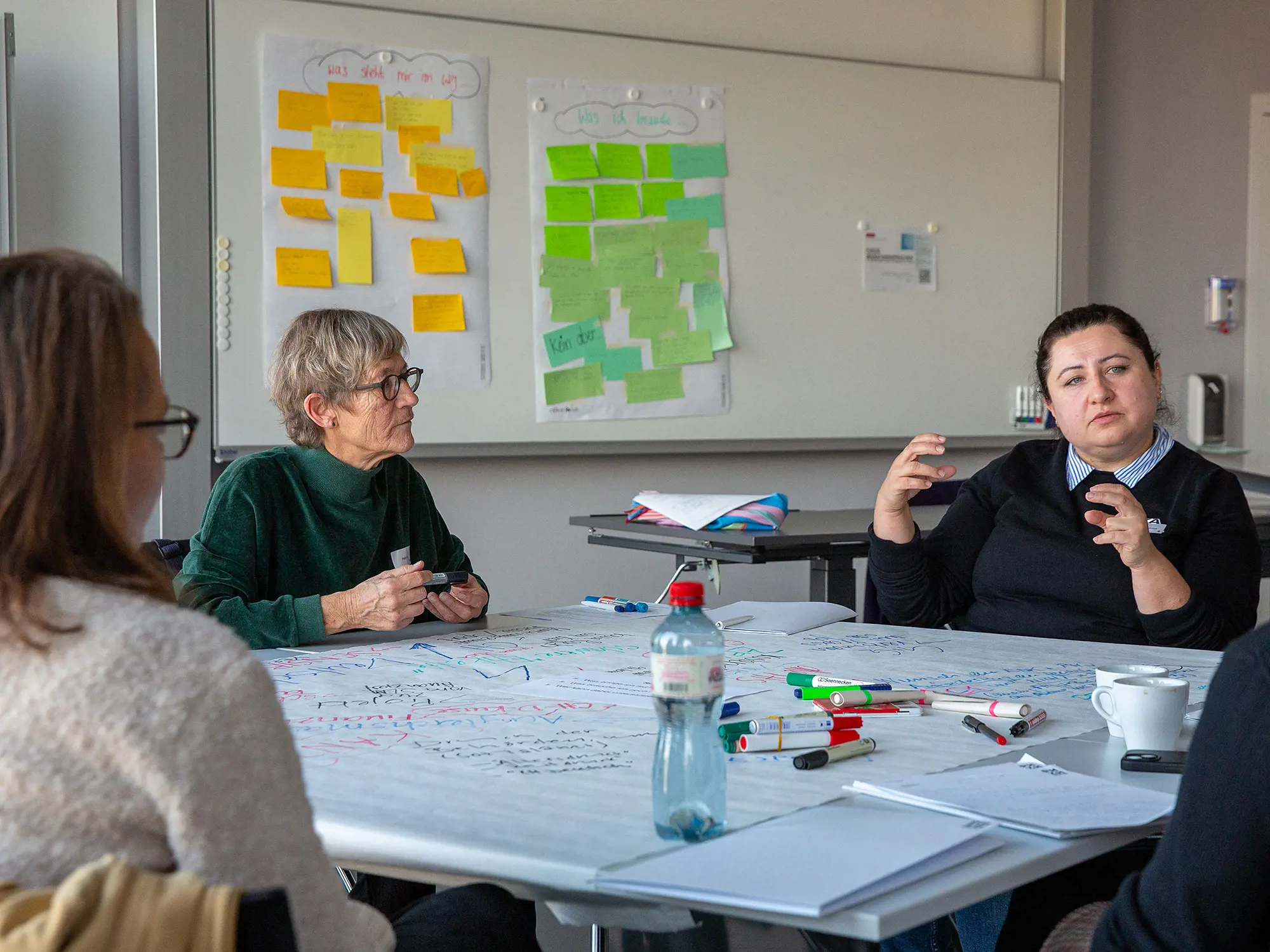
The project aims to give teachers with a refugee background the opportunity to improve their German language skills in a targeted and job-related manner. They will be integrated into a group of peers who support each other and share similar experiences. In various modules, they will acquire knowledge about the Swiss education system, local school culture, participation and diversity. Throughout the year, they will have the opportunity to observe lessons in schools and complete two internships. They will be accompanied by practising teachers and supported by the project. At the same time, the RILF project is developing accompanying measures to address the unique needs of teachers with refugee backgrounds in existing courses at universities of teacher education. These measures aim to provide better support during their studies as part of a case management system. This not only creates opportunities for teachers with refugee backgrounds, but also for the Swiss education system, which can respond to the growing diversity in the classroom with a greater diversity of teachers.
In what other ways does the PH Zurich address the challenges facing refugees?
In the wake of the so-called refugee crisis in 2015 and the Russian attack on Ukraine in February 2022, students and staff offered German courses for refugees. In addition, the Department for International Projects in Education has created tools to promote the life skills of refugee children and young people with the teaching material Unterwegs and the digital learning programme CORE. In addition, there are various research projects on the topic of migration and inclusion, as well as continuing education formats for heritage language teachers (HLT), which are also used by teachers with a refugee background. However, so far there have been no specific programmes for this target group. Now, with the RILF project, we want to close this gap.
Further information
More on the topic
Materials for Heritage Language Teaching in nine languages