International Projects in Education : The importance of changing perspectives: Transcultural learning at the PH Zurich
In one of the many classrooms at the PH Zurich, a group of students discuss the workshop they have just attended. Scraps of Thai and English can be heard, previously the topic was the differences between the Thai and Swiss education systems. Sumolnit Kerdnoonwong, Head of the Department of Adult and Lifelong Education, visited the PH Zurich last week with twenty-two students from Srinakharinwirot University for a training course on school development, leadership and educational technology. Having attended a course at the PH Zurich herself a few years ago, Sumolnit Kerdnoonwong is delighted that other students at her university can now also benefit from the transcultural exchange between the two universities. Amornphong Suksen is in the second year of his Ph.D. program and is particularly interested in how digital media is used in the classroom in Switzerland. His research in the field of digital literacy aims at making it easier for older people in Thailand to access digital media.
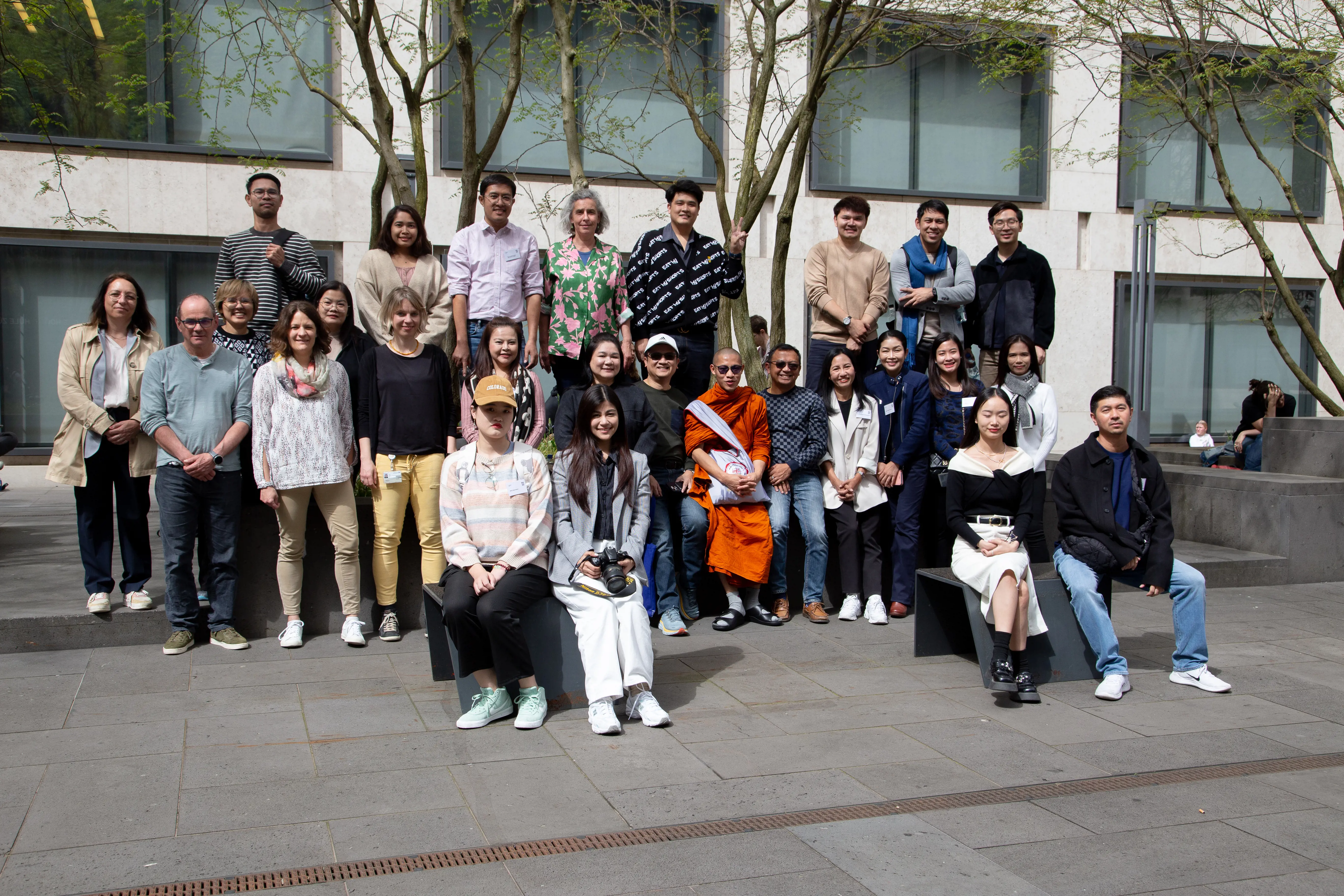
The exchange with Thailand also works in the other direction: Some students from the PH Zurich also spend their exchange semester at Srinakharinwirot University. And as part of its efforts to promote transcultural learning, the PH Zurich is also taking part in the International Conference on Education, which will be held in Bangkok on 14 July. As a well-connected educational institution, the PH Zurich maintains cooperative relationships with over 100 universities worldwide, offers mobility opportunities for students and staff and makes its expertise available to various organisations in Switzerland and abroad. Transcultural learning plays an important role in this. But what does transcultural learning actually mean and why is it also relevant for students at PH Zurich and their pupils? Wiltrud Weidinger, Professor of Educational Sciences at the PH Zurich, explains.
Wiltrud Weidinger, what does transcultural learning mean?
Transcultural learning is an educational approach that aims to further develop the understanding of culture. It involves recognising and appreciating cultural diversity and developing the necessary, so-called transcultural skills. In transcultural learning, culture is seen as something hybrid, a kind of dynamic fabric. Everyone is transcultural and is part of different cultures, such as work cultures, club cultures, cultures of origin and family cultures. Communication between different people is characterised by these different cultures. For mutual understanding to develop, I need to be aware of my own complex background as well as that of the other person. You could therefore also say that you are transculturally competent if you reflect on your own lifeworld and try to understand the perspective of others without stereotyping.
Why is transcultural learning so important today?
In an increasingly globalised world, we interact daily with people who have different backgrounds and influences than our own. Transcultural skills are essential if we want to live peacefully side by side and work together effectively and purposefully. Transcultural learning also promotes a whole range of other skills, such as reflection, empathy, critical thinking, and communication.
Parents, authorities, and society are placing ever greater demands on teachers. Isn’t transcultural learning just another requirement that teachers have to fulfil?
No, because transcultural learning is not about a separate, imposed programme, but rather about a basic attitude. How do I deal with my students and their cultural backgrounds? How do I include all students in discussions? What messages do I communicate, which values do I implicitly convey? Transcultural learning begins with a mindset that translates into appropriate action in the classroom and in the didactic concept. This is possible in a wide range of school subjects, wherever the aim is to learn important, interdisciplinary skills. There is no teaching material on transcultural learning that needs to be reeled off here.
The PH Zurich trains teachers for Swiss schools. Why does it attach such great importance to transcultural learning and international exchange?
The focus on transculturality in Switzerland and abroad is linked to two objectives of the PH Zurich: In Switzerland, it is committed to transcultural learning because living and working together peacefully is an important pillar of a democratic society. People from different backgrounds, origins, languages and religions should meet in a shared, new transcultural space and reflect on similarities, contexts and their own transculturality. Social commitment is also at the centre of the international framework. On the one hand, the expertise of PH Zurich staff in the various content areas should be applied in a meaningful way in dialogue with international partners and thus contribute to innovation in the partner countries. On the other hand, it is also a matter of bringing these transcultural experiences of staff in international contexts back to the PH Zurich and thus contributing to the broadening of perspectives here in Switzerland.
What can the PH Zurich offer its partners and what can we learn from other institutions?
At the PH Zurich we do have experience in dialogue and exchange, particularly in the joint implementation and support of educational projects for various target groups such as teachers, school leaders, lecturers, authorities, universities, education ministries and NGOs. An important part of our work is also the partnership-based development of teaching and learning materials as well as the implementation and support of research projects. We benefit from exchanges with other institutions not only in terms of content, but we also strengthen our own transcultural competences. By working in different contexts, we have the opportunity to reflect on subjective theories, stereotypes, beliefs and behavioural patterns and can integrate these experiences and insights into our own courses in the working context of Switzerland. Entering into dialogue with representatives of other contexts in exchange projects or academic networks leads to enriching changes of perspective – and thus also to new insights into our duties and our self-image as an educational institution.